
Project description
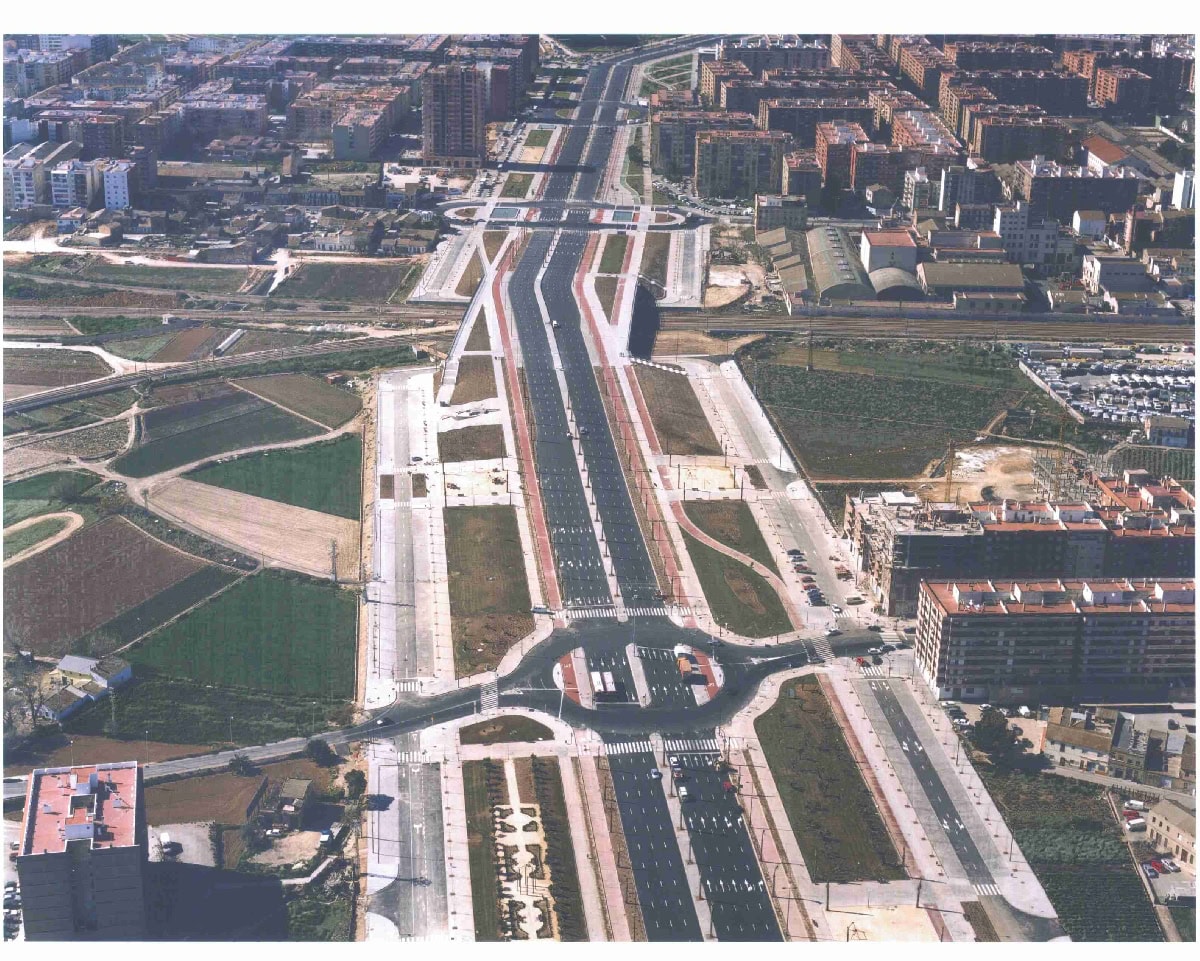
This urban project, promoted by the Ministry of Public Works in agreement with Valencia City Council, defines a primary road included in the General Urban Plan that bypasses the city of Valencia to the south. The sections covered by the project, with a total length of 3,416 m, start at Calle Campos Crespo and end at Calle Fuente de San Luis, crossing Calle Gaspar Aguilar, San Marcelino, San Vicente, Carretera de Malilla and Ausias March, among others. Today these sections are called Bulevar Sur, Avenida Pianista Martínez Carrasco and Avenida Actor Antonio Ferrandis.
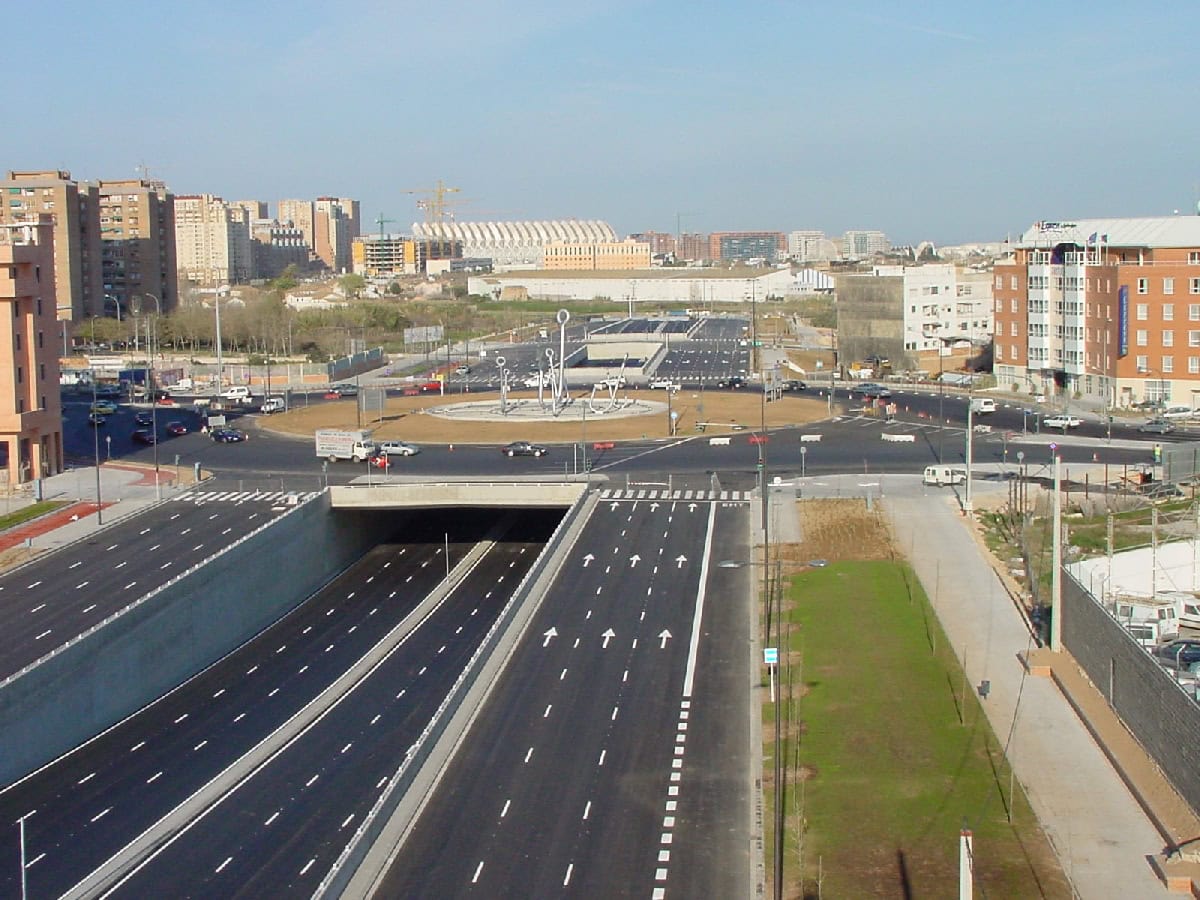
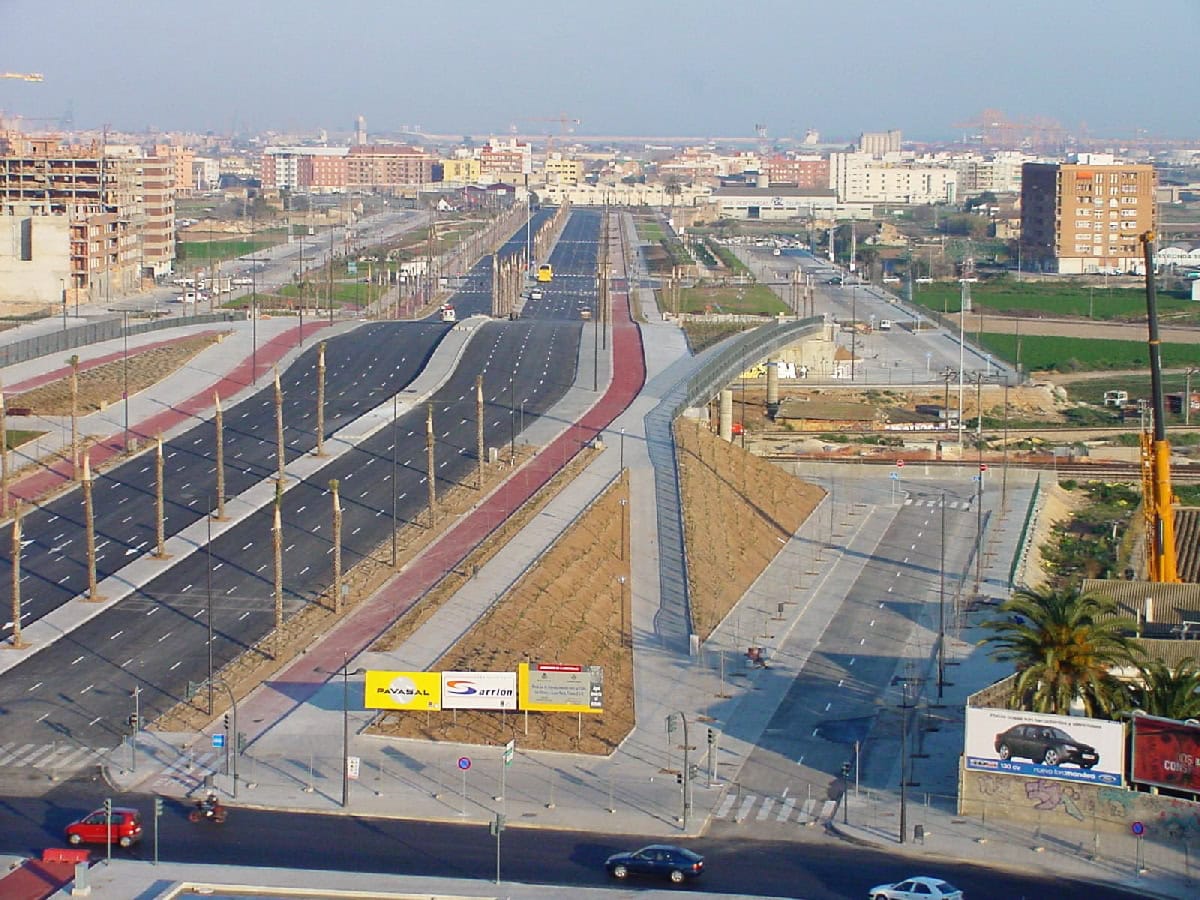
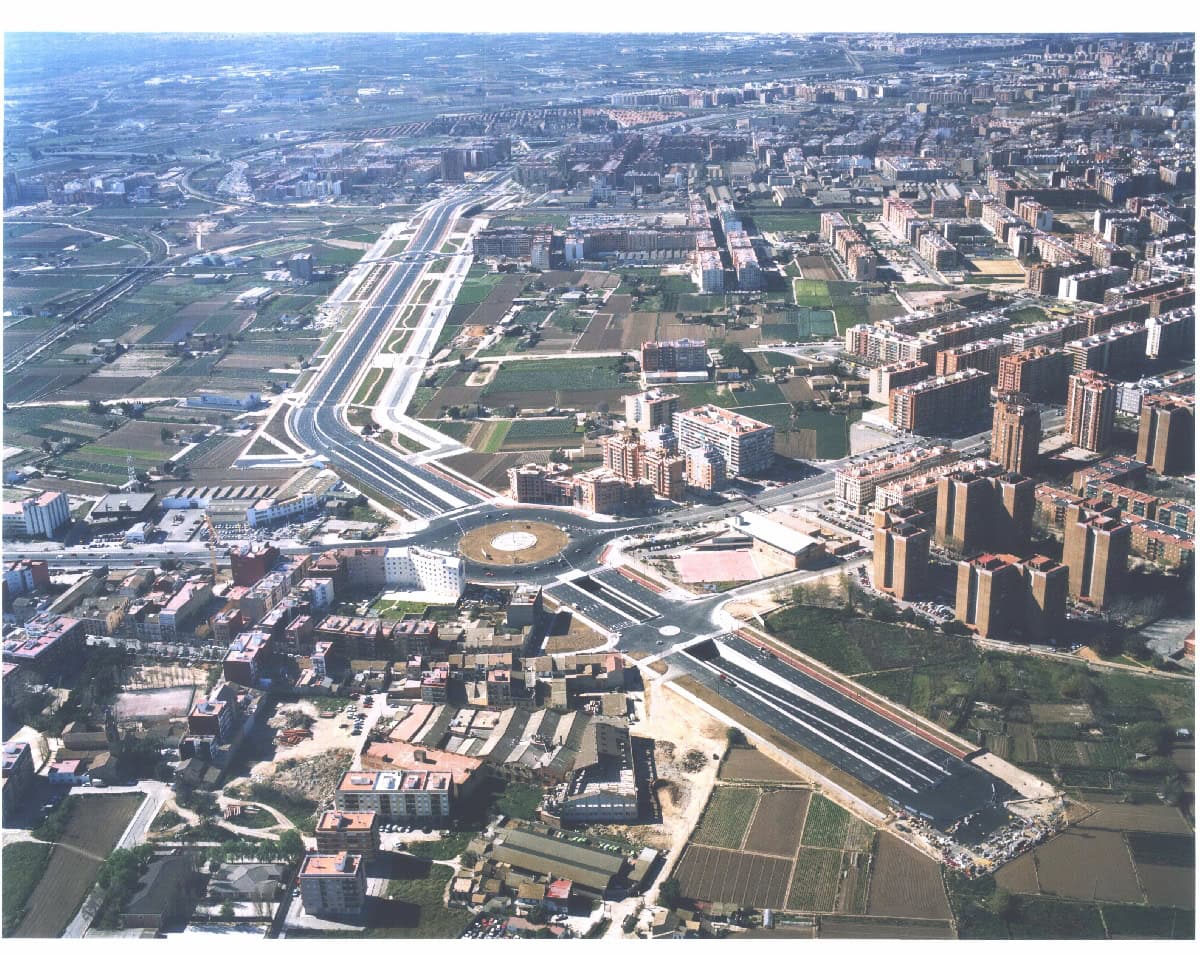
The project conceives this road as a large urban avenue, continuing the sections already built but with a wider cross-section, between 80 m and 132 m, to hold a two-way carriageway with 4 central lanes in each direction, bus lanes alongside, a cycle lane, service roads collecting the secondary streets and providing parking for the adjoining municipal cemetery, and landscaped rest areas with sculptures and fountains. Large squares with ornamental fountains and sculpture groups are included where the avenue meets other streets, and they are used to articulate the horizontal alignment.
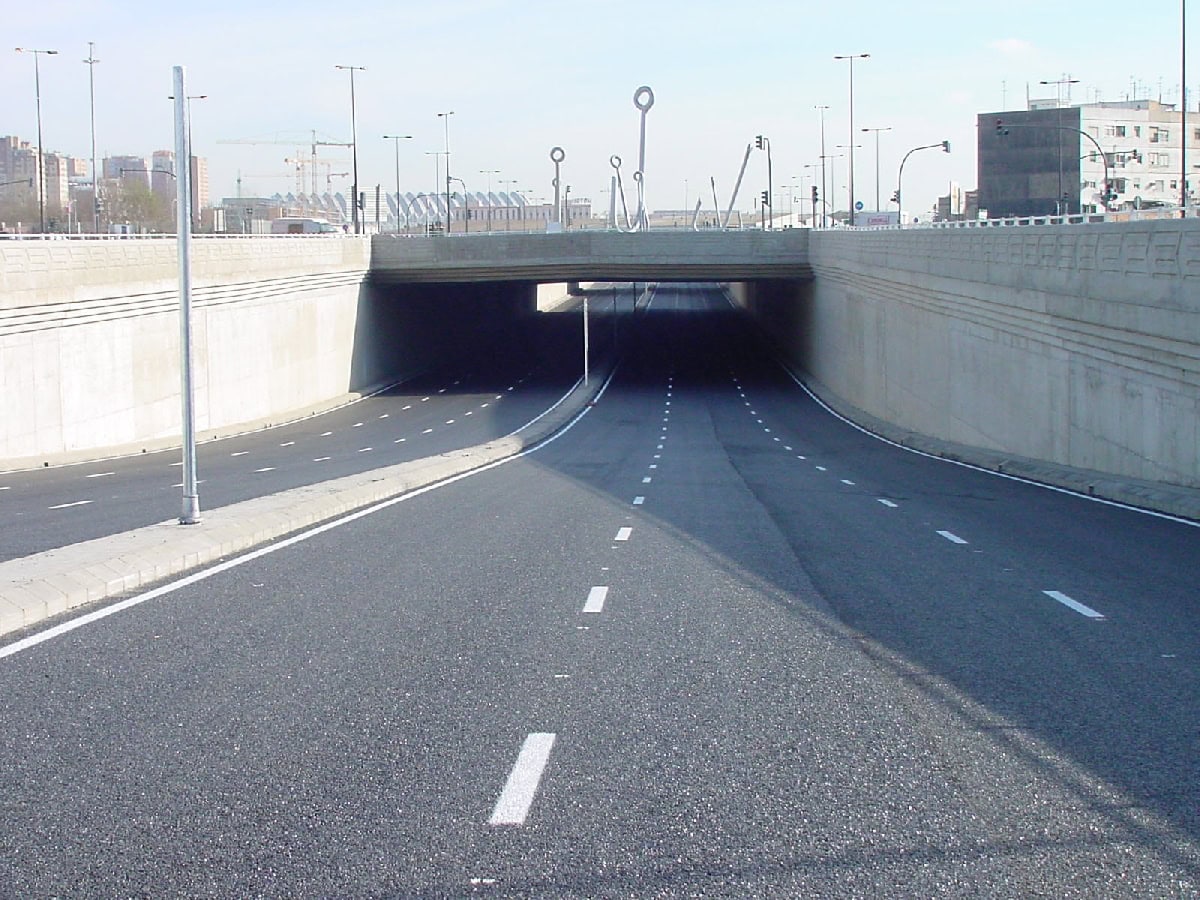
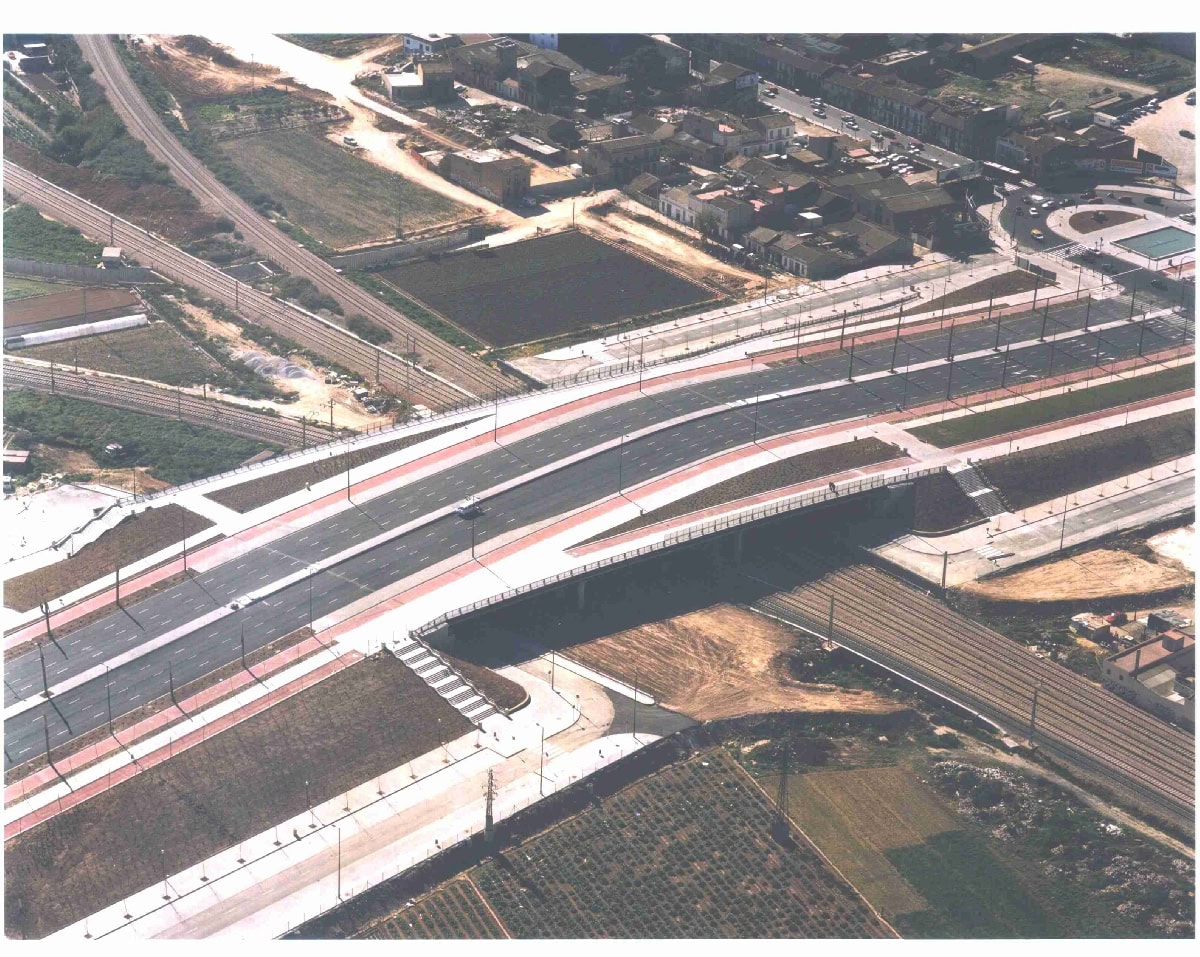
Where the avenue meets the railway yard at the entrance to Valencia station, it is solved with an overpass of U-beams, with complex setting-out due to the position of existing and planned tracks, 80 m long and 70.80 m wide; and at Avenida Ausias March, with an underpass 258.60 m long and 22 m wide beneath the roundabout designed for the junction.
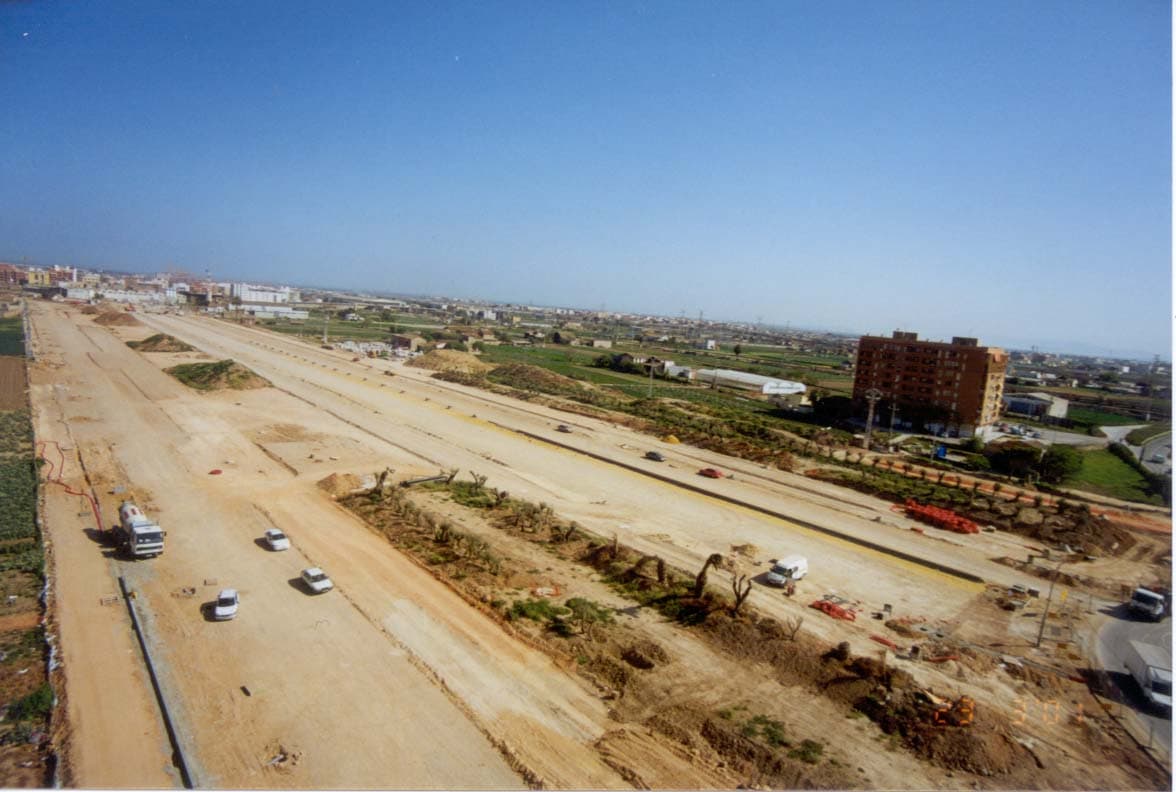
The work is on flat, undeveloped land, with market gardens and many irrigation channels and other services that had to be relocated. Its full development was designed, with earthworks, paving, urban services (water, sewerage, power, lighting, gas, traffic lights, etc.) and landscaping and decoration of the open spaces.
This avenue will allow the later development of this peri-urban area and connect the scattered buildings and existing neighbourhoods, integrating them into the urban fabric of the city.