
Project description
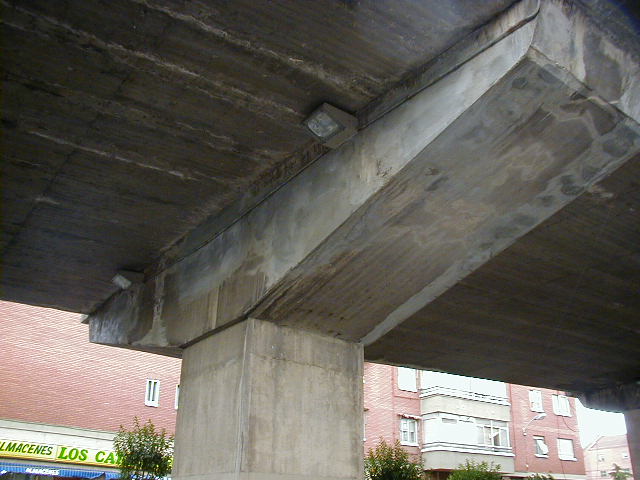
The Arco de Ladrillo Bridge is 236 m long between abutments and 396 m long in total, with 14 simply supported prestressed spans of various lengths. Thirteen of them have a 0.85 m deep multi-cell box section. The central span, over the Renfe railway yard, uses 1.40 m deep precast beams placed side by side and transversely stressed. The structure came from the partial demolition (the whole deck, some piers on the Valladolid side and the sides of the abutments) of an earlier 8.60 m wide structure, widened to the current 12 m. The new bridge has been in service since 1971.
In 2001 José A. Torroja Oficina Técnica S.A. prepared the project for the repair of the concrete surfaces and installation of expansion joints, and also provided technical assistance during the repair works, as well as a special inspection prior to the project.
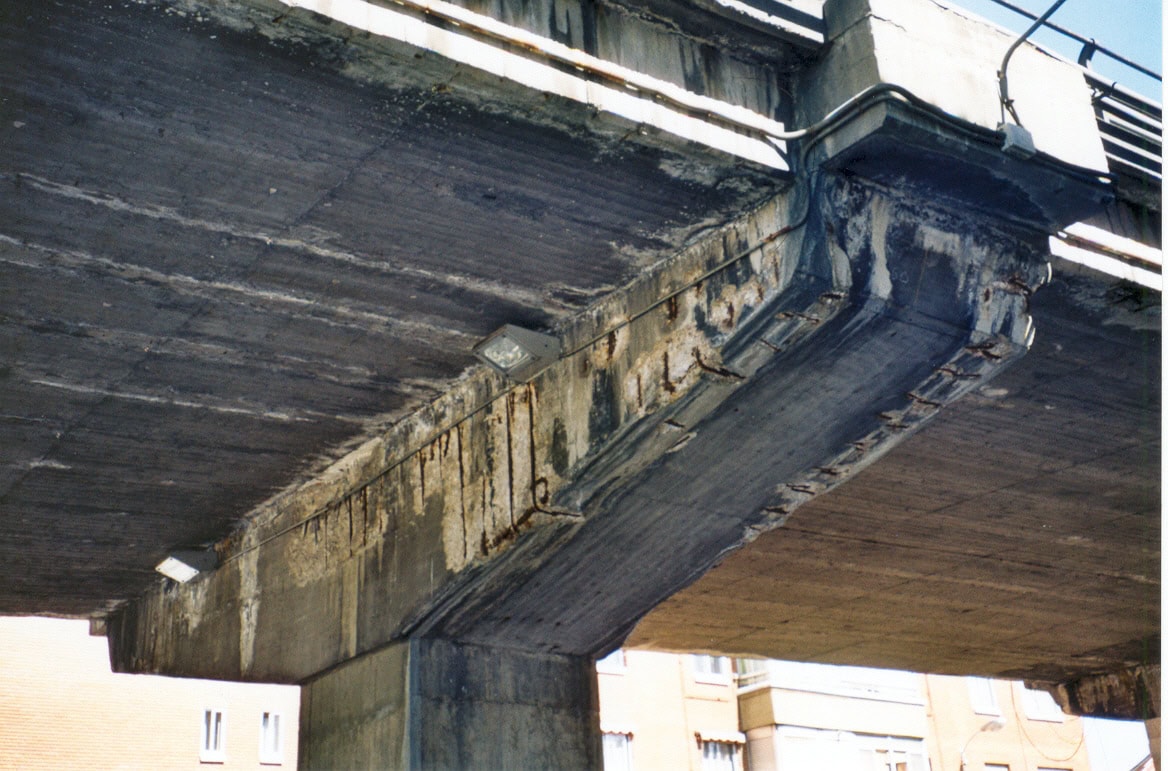
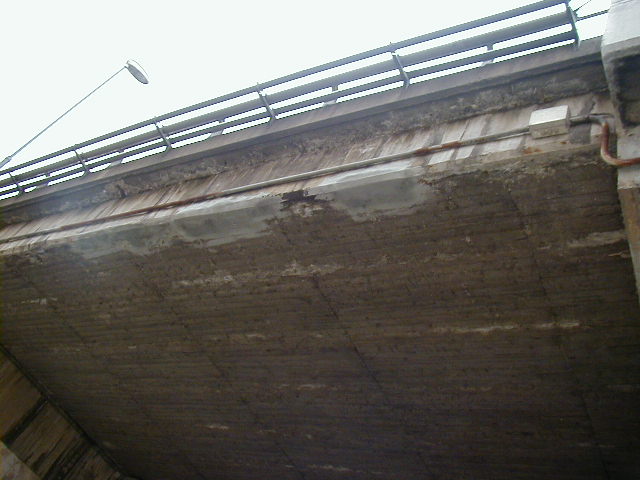
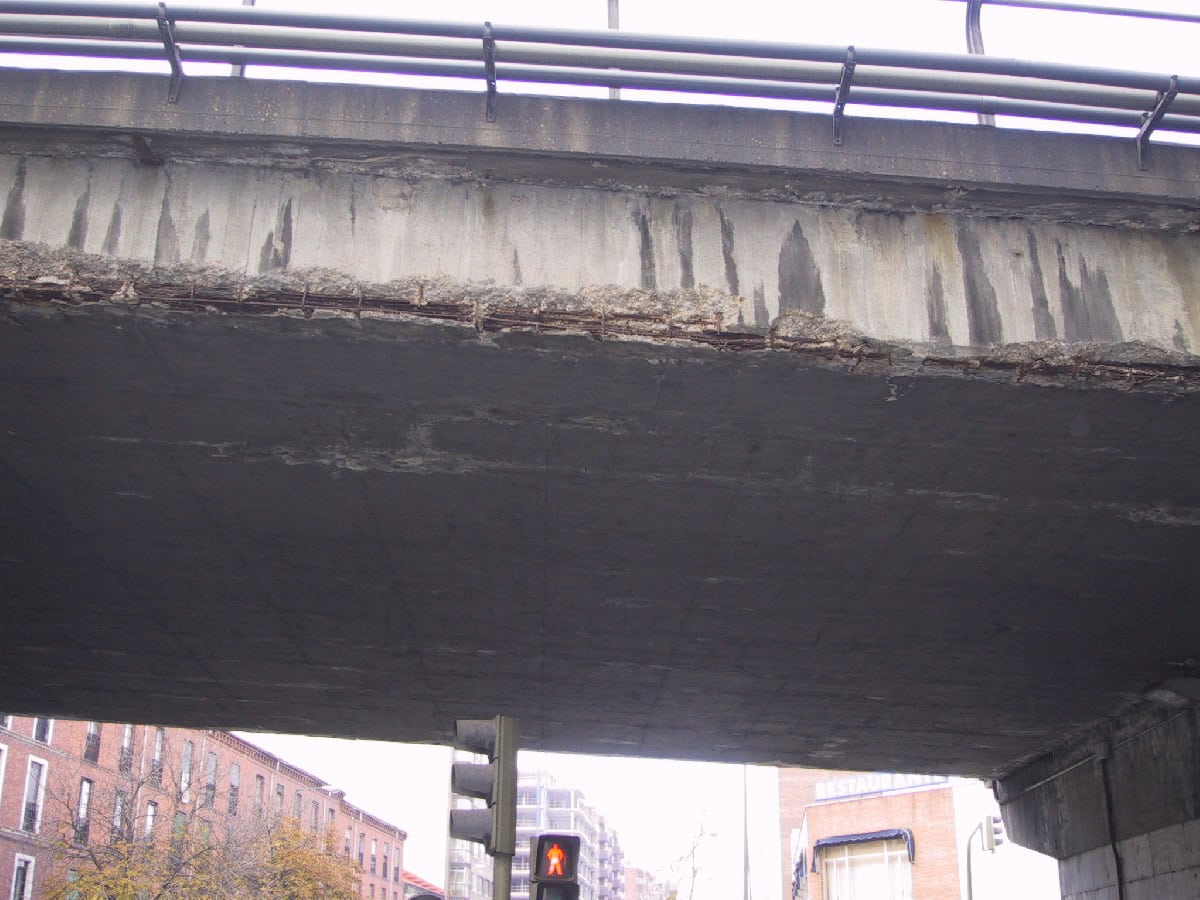
The damage observed does not seem to indicate immediate load-bearing problems. The concrete cores taken during the special inspection show a good general appearance, and the chemical tests show moderate to severe but shallow deterioration, which does not seem to affect its mechanical capacity. As for the reinforcing steel, that of the piers is the most severely affected, and although significant loss of section has been found, it is in compression zones and does not affect the load-bearing capacity. Finally, given the vertical profile of the different spans, there seems to have been no unusual phenomenon in the prestressing steel causing loss of prestress. Even so, the severity of some of the corrosion recorded on the deck edges and on several pier crossheads makes it highly advisable to repair them without delay.
The main works were the phased replacement of the deck over the railway tracks, replacement of the edge beams along the whole bridge, cleaning and repair of concrete surfaces, crack injection and sealing, surface protection, cleaning and replacement of the limestone facing where it was missing, deck waterproofing and resurfacing, a drainage system, expansion joints, and repair of the railing and barrier.