

Project description
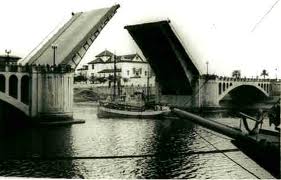
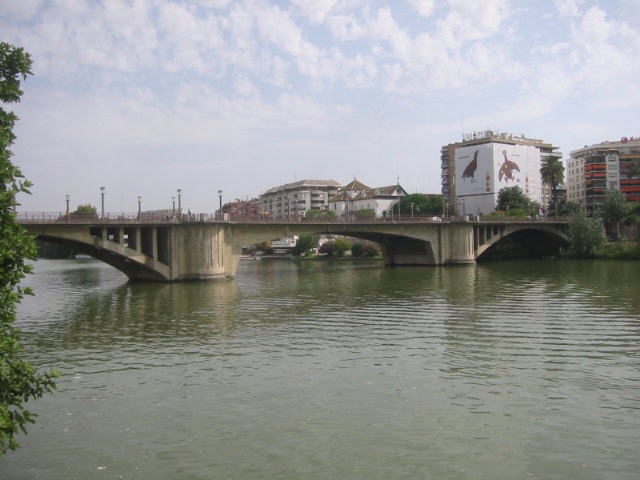
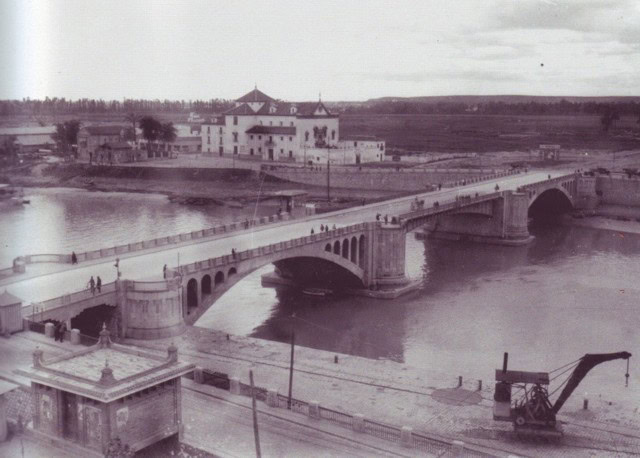
The San Telmo bridge is one of the oldest in the city of Seville, dating back to 1912. It was designed by José Eugenio Ribera and consisted of 2 concrete side spans of 45 m, deck arches with open spandrels, and a 50 m steel bascule central span to let ships through as far as the Triana bridge. In 1964 Agromán refurbished the bridge, replacing the steel lifting span with 2 three-hinged frames.
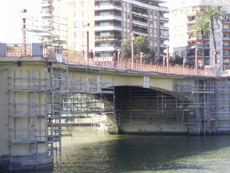
Today the San Telmo bridge consists of two side spans formed by reinforced concrete arches with a clear span of 44.0 m, a central span formed by two three-hinged prestressed concrete frames spanning 50 m, and a straight 9.8 m span on the left bank. The deck is 19.45 m wide, with room for four lanes on a 14.09 m carriageway and two 2.68 m sidewalks. The total length of the bridge is 183.5 m.
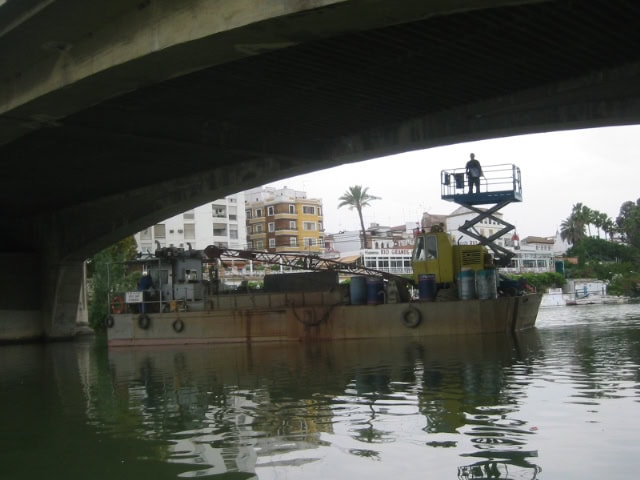
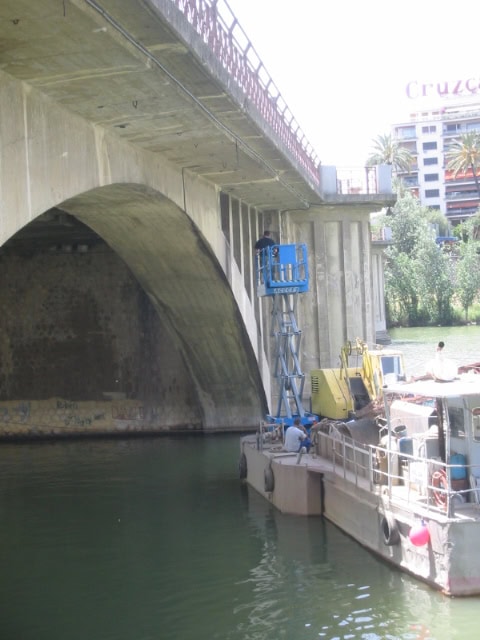
The arches and posts showed non-structural cracking, locally spread over their surfaces. There was also some localised spalling, which in places exposed part of the steel sections of the self-supporting arch trusses. Salt deposits were also observed. The deck slab was one of the most damaged elements, mainly due to water seepage. The external prestressing of the transverse ribs did show serious deterioration, including some broken wires.
The deck of the central span, made of prestressed beams, was in an acceptable state of conservation, except for the crossbeams at the central hinge and the two expansion joints.
After checking the critical sections of the beams of the arch spans, and given the uncertainty about the presence and position of the reinforcement, it was recommended to strengthen the sections near the beam fixings with high-strength bars.
In the central span, it was proposed to inject the cracks located on the bottom faces of the frame boxes. Although a loss of strength had been ruled out in principle, it was prudent to monitor crack activity with graduated glass tell-tales and, if necessary, apply the designed strengthening with carbon-fibre laminate bonded with epoxy resin.
The rehabilitation of the bridge was also to provide the auxiliary elements needed for it to work properly and to prevent deterioration from the weather.
In addition to a complete repair treatment of all surfaces, the replacement of the safety barriers, lighting, drainage, waterproofing and surfacing was designed.