
Project description
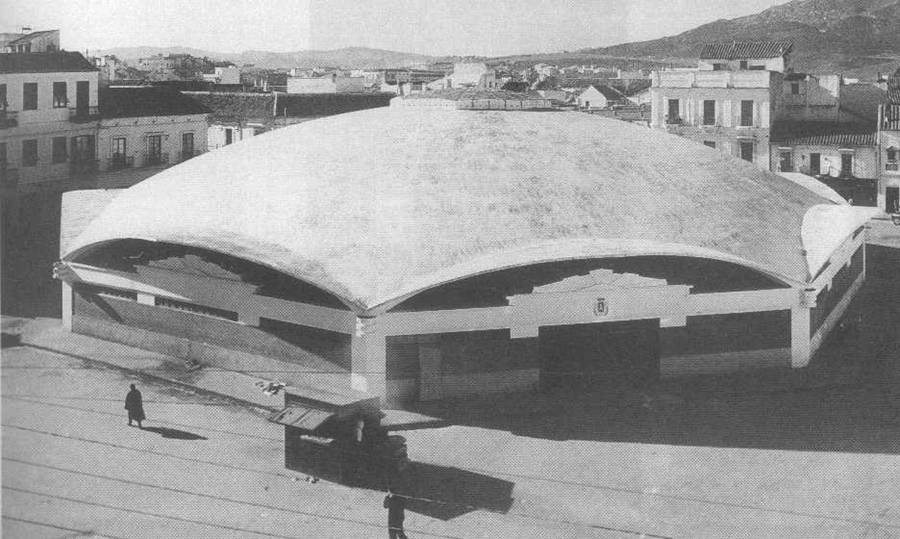
The Algeciras Municipal Market was built to a design by the architect Manuel Sánchez Arcas and the engineer Eduardo Torroja Miret, and was completed at the end of 1934 or the beginning of 1935. (SEE THE DESCRIPTION OF THE ALGECIRAS MARKET ON A SEPARATE PAGE)
DAMAGE TO THE STRUCTURE:
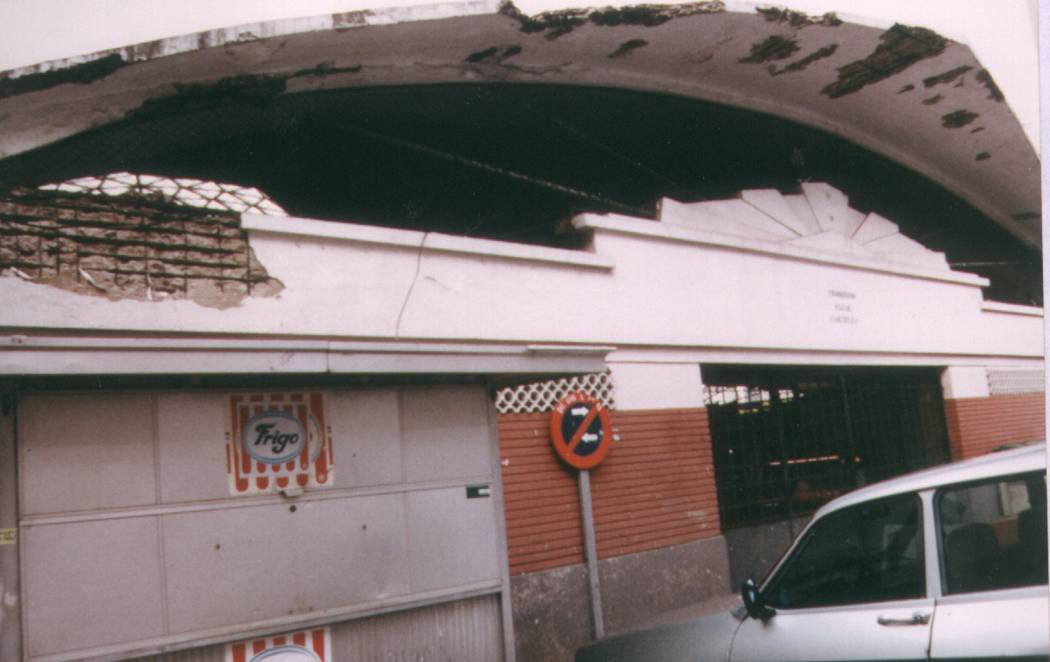
No significant damage could be seen on the inside of the roof, only a few isolated spots with signs of iron oxide. However, the damage was greater on the outer parts of the perimeter vaults, with areas where the concrete had come away from the underside, exposing heavily corroded reinforcement, especially in the vaults facing the coast.
As with the roof, the stiffening arches of the vaults facing the sea had areas of spalled concrete and exposed reinforcement with clear signs of corrosion.
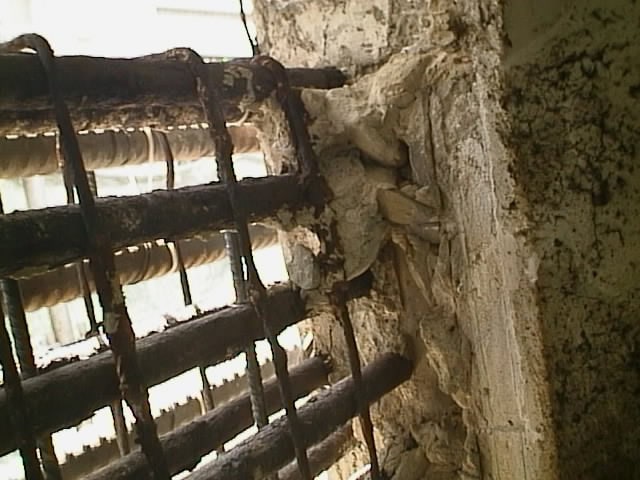
On some sides of the octagon, again mainly those facing the sea, the concrete cover had spalled off the outer face, leaving the tie reinforcement exposed to the weather, with corrosion that was very severe in some areas. No similar phenomenon was seen on the inner face of the ring.
There was a single cause for the damage: corrosion of the reinforcement and the resulting spalling of concrete and cover.
The damage to the roof itself, although very striking, posed no short-term danger to the stability of the building. The damaged areas could be restored by directly replacing the damaged materials, using suitable techniques, and preventing further corrosion in the future.
By contrast, corrosion of the reinforcement of the perimeter tension ring could cause the structure to collapse without warning, in the short or medium term. Moreover, the defective areas could not be restored simply by replacing the damaged material: new material had to be added to supplement the strength of the tension ring, while stopping the ongoing corrosion of the ring.
REPAIRS CARRIED OUT:
The repairs to the roof were conventional: first removing any broken or poorly bonded concrete, thoroughly treating each damaged area and properly cleaning the surfaces; exposing the reinforcement where it was corroded until sound steel was reached, then cleaning and passivating it and, where necessary, adding new bars to replace those lost to corrosion; and finally restoring the concrete volume with mortars suitable for this purpose.
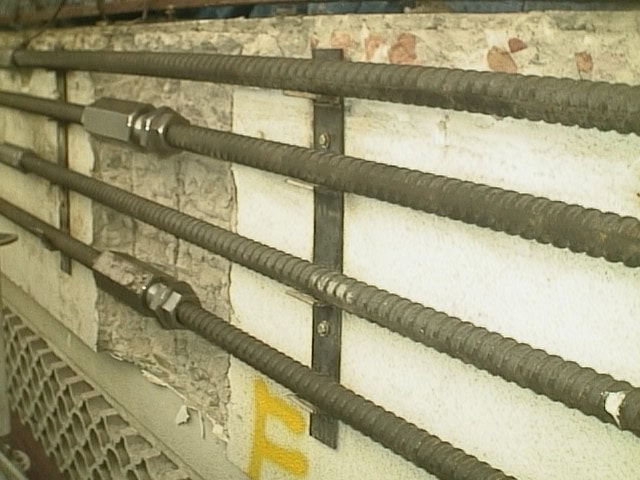
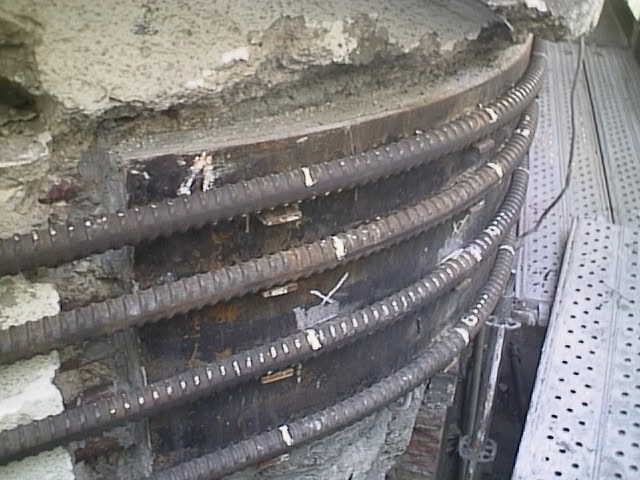
For the repair of the tension ring, since it had to remain active for the safety of the structure, it could not be temporarily replaced by another one; moreover, the condition of the perimeter tie beam meant it had to be demolished and rebuilt. Solutions using new materials such as carbon-fibre laminates were initially considered for its strengthening, but in the end 6 prestressed Ø40 steel bars were chosen; once the perimeter tie beam was recast, they would be protected from corrosive agents and direct sunlight. These prestressed bars would work from the moment they were stressed, without the existing bars having to fail for them to take load. The bars were curved along a 45º arc, bearing on the concrete at the column heads through a steel distribution plate.
The first and most important task was therefore to install the new bars of the perimeter tension ring and stress them, since once the new tension ring was in place, the safety of the building was guaranteed. From then on, the order of the remaining repairs was not critical; most involved crack injection, cleaning and protection of existing reinforcement, adding new reinforcement where needed, treating and cleaning areas with spalled concrete and corroded reinforcement, and restoring the concrete with suitable mortars.